

You've probably had one of these this week. "₹100 has been credited to your account." "Congratulations! Your loan of ₹5,00,000 is 100% approved." You never asked for the money or the loan. You open the chat, and three lines down it turns into an ad for a personal loan, a credit card or a trading app.
I run WhatsApp for a large Indian travel brand and we've sent more than 50 crore messages over the years, so I see these from the sender's side too. These messages are designed this way on purpose, and the reason comes down to how Meta prices and filters WhatsApp business messages.
WhatsApp has two main kinds of business messages
When a business messages you first on WhatsApp, it has to use a template that Meta has approved. Every template gets a category. The two that matter here are Utility and Marketing.
- Utility: tied to something you did or asked for. Your order shipped, your bus is delayed, your payment failed, your ticket is confirmed.
- Marketing: anything that tries to sell. Offers, discounts, new products, "come back and shop", loan and card offers.
Meta wants WhatsApp to stay a place where people read their messages, so it makes utility cheap and puts limits on marketing.
The price gap is huge
In India, Meta has brought the utility rate down from around 30 paise to about 11.5 paise per message. Marketing has gone the other way, from roughly 70 paise to around 86–88 paise per delivered message, depending on the provider. These are Meta's base rates; GST and provider fees come on top.
“A marketing message costs about 7 to 8 times what a utility message costs.”
Now picture a lender sending 1 crore messages a month. As marketing, that's roughly ₹86 lakh. As utility, it's about ₹11.5 lakh. That saving is the reason this trick exists.
Meta also limits how many ads reach you
Price is only half of it. Every person on WhatsApp has a limit: X marketing messages in a rolling window, counted across every brand that messages them. Meta keeps X a black box. It doesn't tell brands the number, the length of the window, or how close you are to it. Brands only find out they've hit it when their messages start failing. Once you've hit it, the next brand's marketing message simply isn't delivered, and the sender gets error 131049: "This message was not delivered to maintain healthy ecosystem engagement."
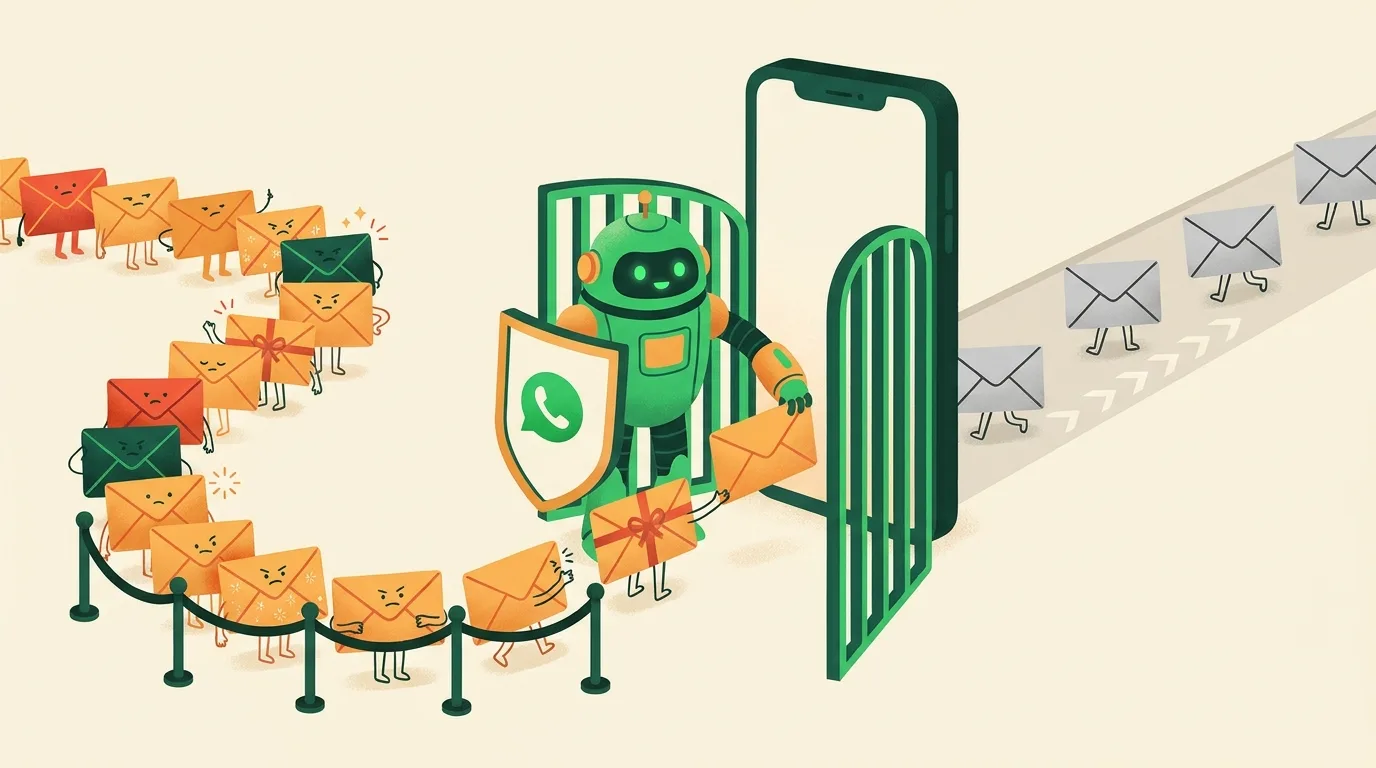
Meta's systems also look at how people respond. If people ignore, block or report a brand's marketing, fewer of its messages get through. Utility messages aren't counted against this per-person marketing cap. So for a brand, a utility message is both cheaper and more likely to land.
The trick: a utility template with an ad in the variables
Templates have fixed text plus variables, the slots like {{1}} and {{2}} that get filled in at send time with your name, an amount or a date. Meta reviews the fixed text when it approves the template. It can't check every value a brand puts into those slots on every send.
So a brand gets a template approved that reads like an account update: "An amount of ₹{{1}} has been credited to your account. Details: {{2}}." That passes as utility. At send time, {{2}} becomes "Get a 100% pre-approved personal loan up to ₹5 lakh in 2 minutes. Apply now."
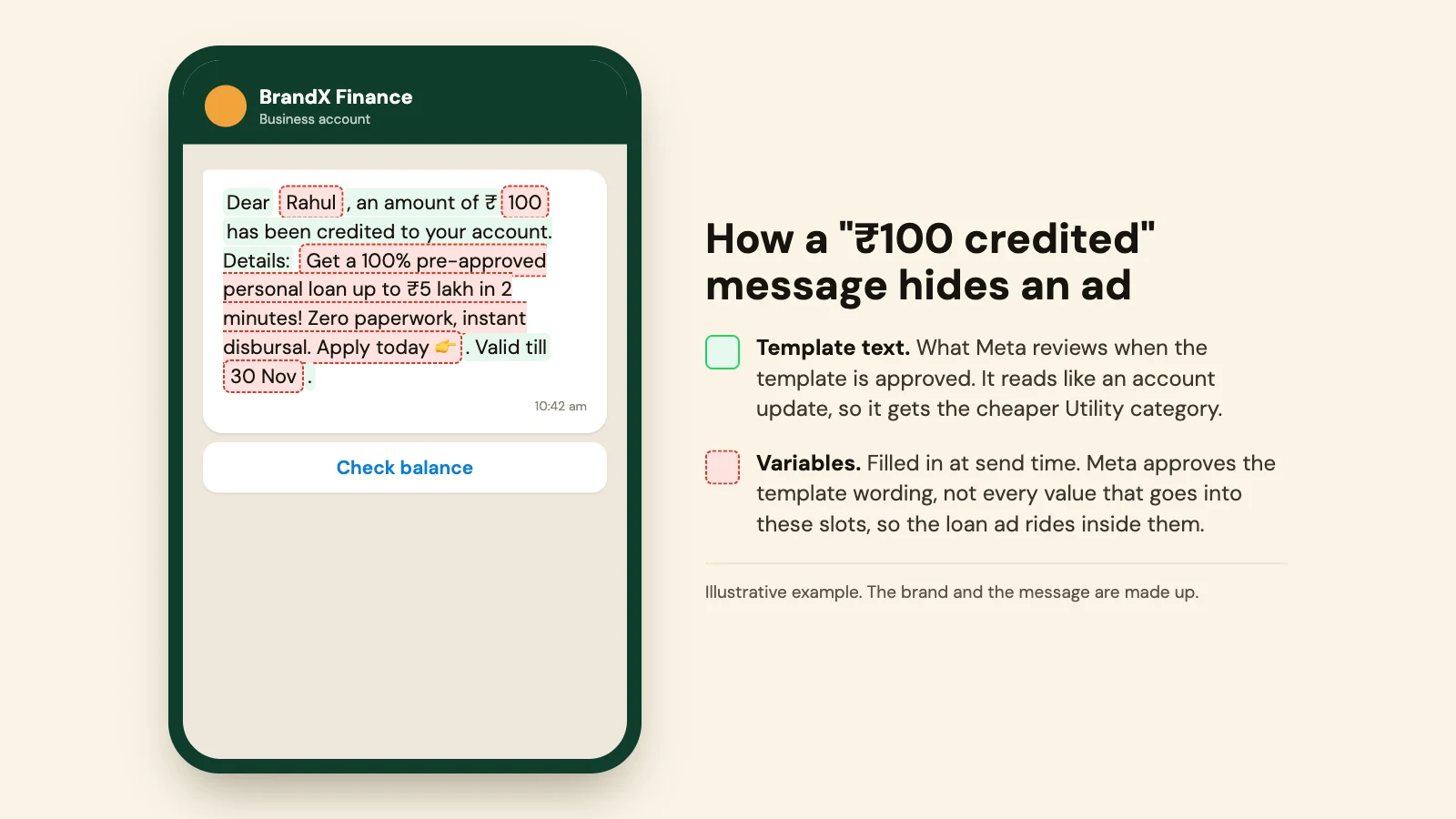
The "₹100" is usually reward points or app wallet credit that you can only spend on the brand's own product, often only when you take the loan or make a purchase. It isn't money in your bank account.
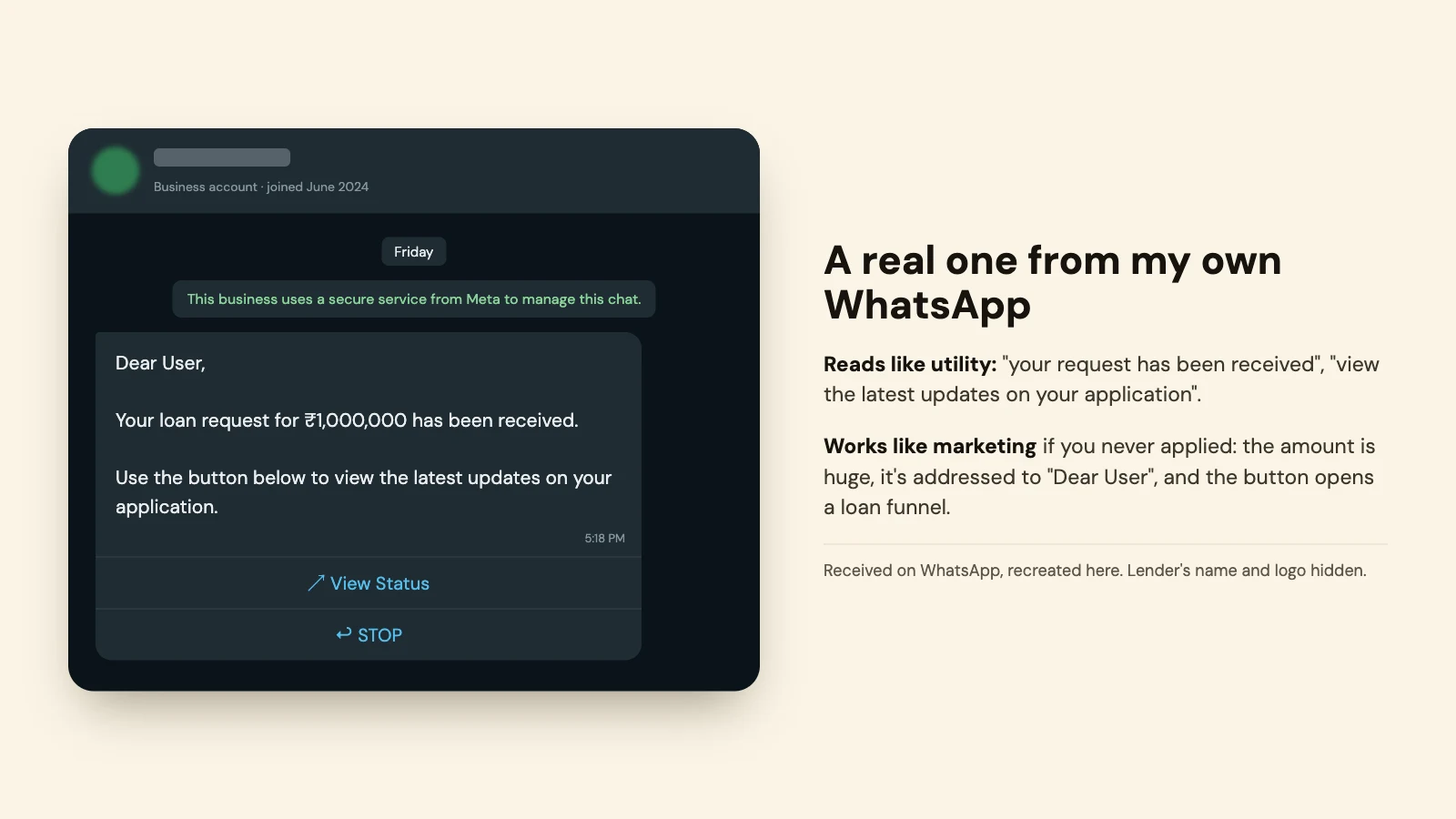
Here's one I got last Friday. The wording is a classic application update: your request was received, tap to see the status. That's fine if you applied. If you didn't, it's a sales message using the shape of a utility update. It goes to "Dear User" instead of a name, it quotes ₹10 lakh, and the button leads into the lender's loan flow.
Why this is bad for everyone
For you, it trains you to distrust real account alerts. When your actual bank sends a genuine "amount credited" message, it now sits next to ten fake ones. Scammers copy the same format, and the line between a pushy lender and a fraud gets harder to see.
For brands, it's borrowed time. Meta can re-check a template and move it to Marketing, and every block and report lowers the business's quality rating. A low rating limits how many people the brand can message. I've watched marketing campaigns lose delivery because a brand had been sending too much, so I know how quickly Meta reacts to bad engagement.
For honest marketers, it raises the bar for everyone. The more brands abuse utility, the stricter Meta gets with every utility template, including the useful ones like booking confirmations.
How to spot a disguised ad
- It says you received money or approval for something you never applied for.
- The "details" part reads like an ad: "in 2 minutes", "zero paperwork", "limited time".
- The button says "Check balance" or "Claim now" and opens an app download or loan form.
- The amount is small and round (₹50, ₹100, ₹500) and comes with an expiry date.
- It comes from a business you've never dealt with, or one you used once years ago.
What you can do
- Don't tap links in these messages. If you think the money is real, open the bank or app yourself and check.
- Never share an OTP, PIN or card details because a message promised you a credit or a loan.
- Before taking any loan, check that the lender is a bank or an RBI-regulated NBFC. RBI publishes a list of digital lending apps linked to regulated lenders.
- Block and report the chat on WhatsApp. Reports count against the sender's quality rating.
- If you've lost money, call the cyber crime helpline 1930 or file a complaint at cybercrime.gov.in.
A note for marketers
I get the temptation. Marketing budgets are tight and the cap hurts. But the better fix is relevance. Send fewer marketing messages to people who have shown real intent, keep utility for things that are actually about the customer's account, and measure every campaign against a holdout group. On our side, getting categories right is what brought WhatsApp cost down by around 85% on the flows we moved, without fake credits and without hurting conversions.