WhatsApp marketing in India is no longer optional. It is where your customers read, reply and buy. Over the last few years I have run WhatsApp for a large Indian travel brand — transactional updates every day, plus big campaigns every few months. Add it up and it is well over 50 crore messages. Here is what that volume taught me.
1. Understand the two kinds of templates
Business-initiated WhatsApp messages go out as approved templates, and Meta classifies each one as Utility, Marketing or Authentication. Utility (a booking update, a pending action on an account) is cheaper and is delivered more freely. Marketing (offers, discounts, promotions) costs more and is capped per user when people stop engaging.
“Add a single promo button or a discount line to a utility template and it becomes a marketing template. Write each template for one clear purpose.”
Getting categories right was one of the biggest levers on cost. By restructuring messages so that useful, account-related information goes out as utility and offers go out as deliberate marketing, we brought our WhatsApp cost down sharply — around 85% on the flows we moved — without losing conversions.
2. Relevance beats reach
Meta now watches how people react to your messages. Blast the same offer to everyone and you will see more "healthy ecosystem" delivery failures on your next sends. The fix is not fewer messages — it's better targeting. Send the right message to the person who searched yesterday, abandoned a payment, or travels the same route every month.
- Searched but didn't book → a reminder with the exact route and date
- Payment failed or stuck → a quick, helpful nudge within the hour
- Booked once, never returned → a personal return-trip coupon
- Regular traveller → early access before festive fares rise
3. Respect time and consent
Two simple rules protect the channel. First, no marketing sends outside daytime hours — a 6 a.m. offer earns a block, not a booking. Second, every STOP is final. I built a single opt-out register across brands and channels that every send script checks before a single message goes out, and it syncs to our CRM tool automatically.
4. Measure against a control group
"We sent 10 lakh messages and got 5,000 bookings" means nothing. Some of those people would have booked anyway. Every campaign I run keeps a holdout group that gets nothing, and the real result is the difference between the two. Across 145+ growth experiments, this single habit is what separated real wins from lucky ones.
5. Win festive season early
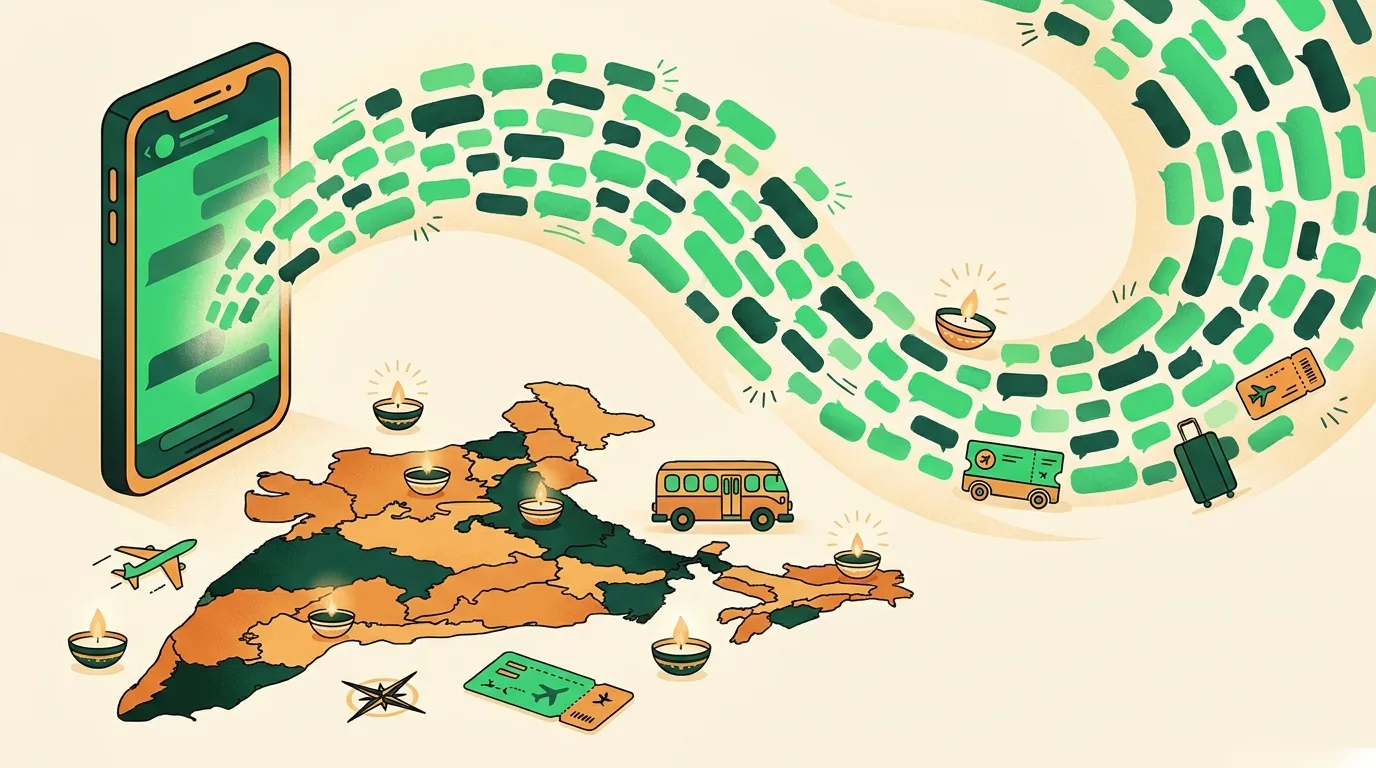
Diwali, Dussehra and Chhath decide a travel company's year. People start searching weeks before. I use a demand forecast built on three years of booking curves to plan when to send, to whom, and with what message — so campaigns land when intent is rising, not after seats are gone.
6. Make it two-way
WhatsApp is a conversation, not a billboard. When customers reply, someone — or a well-tested AI agent — should answer. The brands that win on WhatsApp in India treat it like their best customer-care desk that also happens to sell.
The checklist
- One purpose per template; get the category right
- Target by behaviour, not by the whole database
- Send only in daytime hours; honour every STOP
- Keep a holdout group on every campaign
- Plan festive pushes from demand data, weeks early
- Answer replies — WhatsApp is two-way